
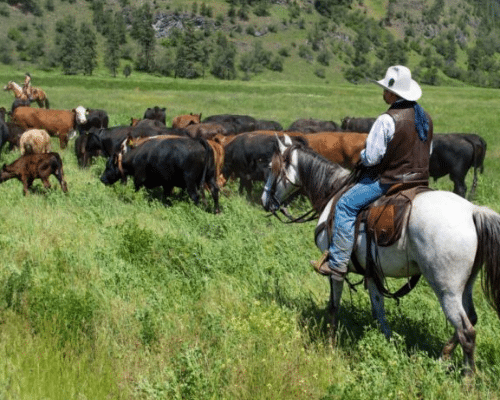
Cattle Drive Vacations at Bull Hill Guest Ranch
Bull Hill is a working cattle operation on open range in Kettle Falls, Washington. Guests may have the opportunity to participate in a cattle drive, but drives happen only when the ranch needs cattle moved. Cattle location, pasture conditions, weather and ranch operations determine availability. No cattle drive is guaranteed for any stay or date.
What Is a Cattle Drive?
At Bull Hill, a cattle drive means moving cattle as part of the working-ranch operation, including movement between grazing areas. The cattle need to be moved for ranch reasons; the drive is cattle work rather than a staged trail ride or a scheduled visitor attraction.
Do Cattle Drives Still Happen Today?
Yes. Bull Hill operates cattle on open range, and real cattle drives still happen when ranch conditions require them. Guests may have the opportunity to participate when a drive is needed, but a guest’s interest or request does not determine whether cattle need moving. Cattle location, pasture conditions, weather and ranch operations do.
What Is a Cattle Drive Vacation at Bull Hill Like?
A Bull Hill stay is broader than one possible cattle drive. Guests stay on the ranch and combine lodging, full meals and beverages with guided horseback riding, fishing, recreation at private Ansaldo Lake and other ranch activities. A cattle drive may become part of that visit if ranch operations call for one; it is not a promised part of the rate.
The working ranch vacation guide explains the overall experience alongside an operating cattle ranch. Explore guided ranch riding and what an all-inclusive Bull Hill stay covers to plan a vacation that does not depend on cattle needing to move.
When Do Cattle Drives Take Place?
Cattle drives begin June 1 and roundups continue through October. Cattle location, pasture conditions, weather and ranch needs determine when and where a drive occurs.
During that season, the average ranch need is about three cattle drives per week. That is an average of the work the ranch needs, not a fixed schedule, a booking promise or a guarantee of guest availability. No cattle drive is guaranteed for any stay or date, even during the drive season.
When a cattle drive is needed, Bull Hill’s Wranglers offer it to their groups and make plans to leave for the drive the following morning. The opportunity follows actual ranch work rather than a date selected in advance by visitors.
How Long Does a Cattle Drive Last?
A Bull Hill cattle drive can last about half a day to a full day as cattle move between seasonal grazing areas. It is a different commitment from simply choosing a recreational ride, so consider that duration alongside your riding confidence when discussing your interest with the ranch.
How Much Riding Experience Do You Need?
Bull Hill has horses ranging from beginner to advanced for its broader guided riding experience. That horse selection does not mean a beginning rider can automatically participate in cattle work. Anyone taking part in a cattle drive should be able to ride with complete confidence.
Read about regular guided horseback riding and discuss your riding background with Bull Hill. Guided ranch rides and cattle-drive participation are distinct experiences.
What’s the Difference Between a Trail Ride and a Cattle Drive?
Guided Ranch Riding
Regular ranch riding is part of the normal Bull Hill guest-ranch experience and is guided by the ranch team. Bull Hill has more than 70 horses ranging from beginner to advanced, supporting guests with a range of riding backgrounds.
Cattle Drives
A cattle drive is real working cattle activity, not an advanced version of a recreational trail ride. Its timing follows operational need, participants should ride with complete confidence, and the work may last half a day to a full day. A drive is never guaranteed for a particular stay or date.
The horseback riding vacation guide covers the guided riding experience you can build a ranch stay around, separately from conditional cattle work.
Can You Plan a Vacation Around a Cattle Drive?
Guests interested in cattle drives can plan a stay during the June 1 through October season and tell Bull Hill they are interested. The ranch cannot guarantee that cattle will need moving during a specific visit. Neither a stay during that season nor the average of about three weekly drives reserves a cattle-drive opportunity.
Plan a working ranch vacation you will enjoy whether or not a drive occurs. Compare lodging options and current rates and stay conditions with the broader ranch experience in mind.
A Real Working-Ranch Experience
Bull Hill Guest Ranch operates alongside a working cattle ranch. Cattle location, pasture conditions, weather and ranch need control cattle movement, so the guest opportunity follows actual work rather than being placed on a fixed visitor schedule. That operational relationship explains both what makes a drive meaningful and why it cannot be promised.
For the wider context, explore life alongside the working ranch. The guide to dude ranch and guest ranch terminology explains how ranch vacations can differ, while the Washington guest-ranch overview introduces Bull Hill’s setting and hospitality.
Cattle Drives and Working-Ranch Life
Riders and cattle in woodland clearings and open meadows offer a glimpse of working-ranch life, in color and black and white. Cattle drives happen only when ranch operations require them and are never guaranteed for a particular stay or date.


Planning a Bull Hill Cattle Drive Vacation
- Consider the season: June 1 through October is the cattle-drive season. Choose dates knowing that actual ranch needs, not the booking calendar, determine whether a drive occurs.
- Choose your stay: Explore cabins and glamping accommodations and use the interactive ranch map to see lodging and guest areas.
- Review stay requirements: Check current rates and policies. The current minimum is two nights, which management may waive depending on availability.
- Talk with the ranch: Discuss your riding background and cattle-drive interest with Bull Hill. Expressing interest does not guarantee participation or that a drive will be needed.
- Plan beyond cattle work: Include guided riding and other ranch activities in your plans so you can enjoy the stay whether or not cattle need moving.
Quick Answers About Cattle Drives
- What is a cattle drive?
- At Bull Hill, a cattle drive means moving cattle as part of the real working-ranch operation, including movement between grazing areas. It is cattle work, not a scheduled visitor attraction.
- Do cattle drives still happen today?
- Yes. Bull Hill manages cattle on open range, and real drives take place when cattle location, pasture conditions, weather and ranch needs call for cattle to be moved.
- Can guests join cattle drives at Bull Hill?
- Guests may have the opportunity to participate when the ranch needs a drive. Wranglers offer a needed drive to their groups and plan to leave the following morning. Participants should ride with complete confidence.
- When is cattle-drive season at Bull Hill?
- Cattle drives begin June 1 and roundups continue through October. Visiting during that season does not guarantee a drive during your stay.
- Are cattle drives guaranteed?
- No. A cattle drive is never guaranteed for a particular stay or date. Availability follows actual cattle work, not a guest booking or request.
- How often does Bull Hill need to move cattle?
- During the June-through-October season, the average ranch need is about three drives per week. That average is not a schedule, a promise of guest availability or a guarantee.
- How long can a cattle drive last?
- A Bull Hill cattle drive can last about half a day to a full day as cattle move between grazing areas.
- How much riding experience do I need?
- Cattle-drive participants should be able to ride with complete confidence. Bull Hill’s beginner-to-advanced horse selection serves the broader guided riding experience; it does not automatically establish cattle-drive readiness.
- Is a cattle drive the same as a guided trail ride?
- No. Regular ranch rides are guided recreation within the guest-ranch stay. Cattle drives are working cattle activity, with timing determined by ranch need rather than a visitor schedule.
- Can I plan a cattle-drive vacation?
- You can consider a stay during the June 1 through October season and tell Bull Hill about your interest, but the ranch cannot guarantee cattle will need moving during your visit. Plan a ranch stay you will enjoy without a drive.
- Is Bull Hill a working cattle ranch?
- Bull Hill Guest Ranch operates alongside a working cattle ranch on open range. Cattle movement follows cattle location, pasture conditions, weather and ranch needs.
- What can I do if a cattle drive does not happen during my stay?
- Guided horseback riding, fishing, private Ansaldo Lake recreation and other ranch activities are part of the broader guest experience, alongside ranch lodging, full meals and beverages.
Plan Your Bull Hill Ranch Stay
Choose your ranch accommodation, review rates and stay policies, and contact Bull Hill about your riding interests. Book the full guest-ranch experience, with cattle-drive participation only if ranch operations require a drive and you can ride with complete confidence.